
A 10-Night Luxury Botswana Safari Itinerary: Chobe, the Okavango and the Salt Pans
By Neil Peacock · 10 November 2026 · 7 minute read
There are few journeys in Africa as varied as this one. In ten nights you move from a great river crowded with elephants, to the reed channels and palm islands of the Okavango Delta, to the silence of the salt pans, where the only sound at night is the wind. Each place is wild in a completely different way, and together they are the best of Botswana.
This Botswana safari itinerary is the shape we would start from for a first visit. Every trip we plan is then built around the people travelling and the month you go, because in Botswana the month changes everything.
At a glance
RouteChobe or the Linyanti, the Okavango Delta, then the Makgadikgadi salt pans.
Getting thereFrom London via Johannesburg to Kasane, home from Maun. Light aircraft in between.
Best monthsMay to October for elephants and high water. December to April for the zebra migration on the pans.
Shorter or longerSeven nights covers Chobe and the Delta. Add Victoria Falls for twelve.
In this guideThe itinerary · Chobe · The Delta · The salt pans · By season · Your version · Practical
01
A 10-Night Botswana Safari Itinerary
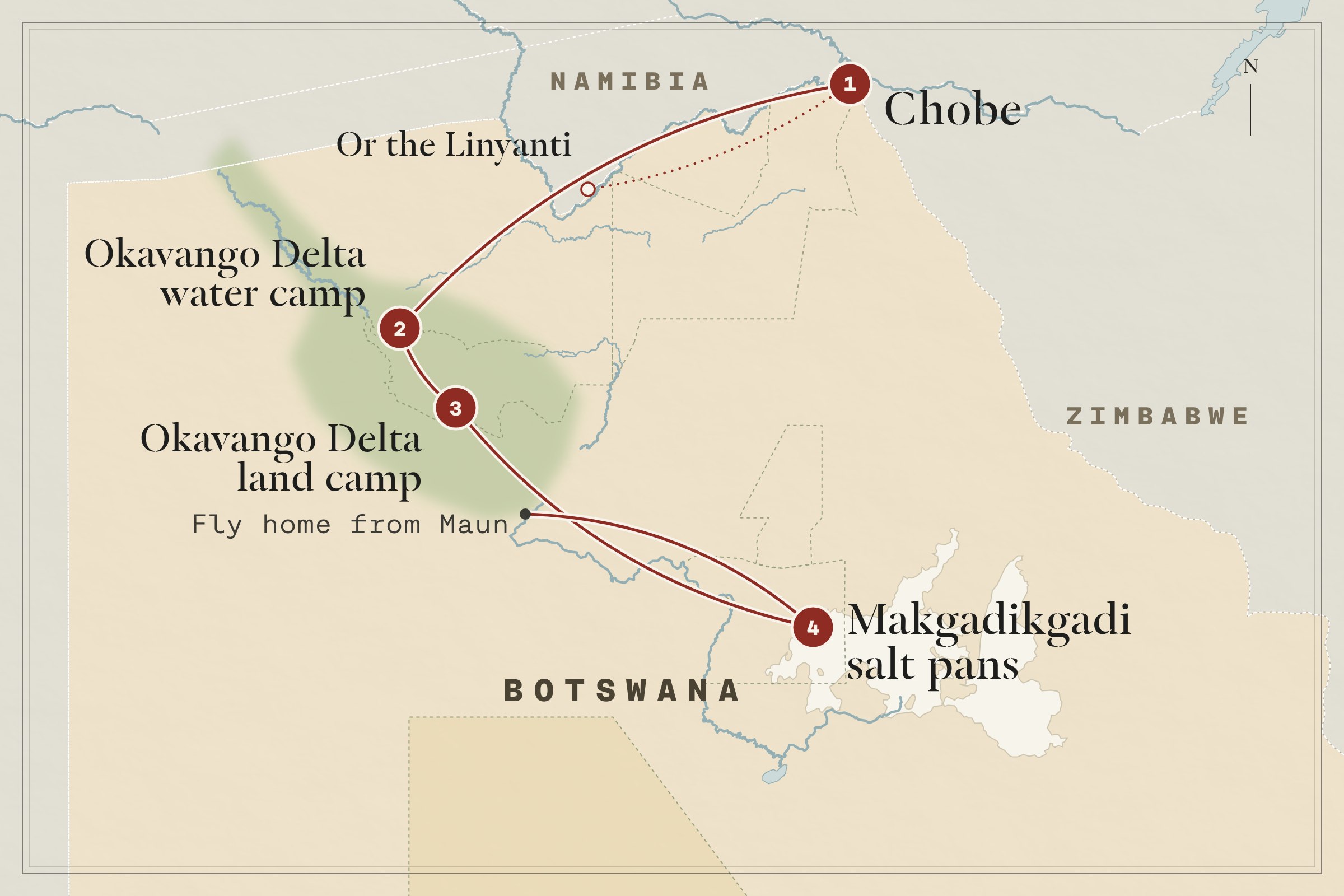
- — Nights 1 to 3: Chobe or the Linyanti. Boat safaris among the elephants on the Chobe River, or a private concession in the Linyanti.
- — Nights 4 to 5: A water camp in the Okavango Delta. Mokoro trips, motorboats and birdlife.
- — Nights 6 to 7: A land camp in the Delta. Game drives and walks on the islands.
- — Nights 8 to 10: The Makgadikgadi salt pans. Zebra, meerkats and nights under the stars.
Each move is a short flight in a light aircraft, often only forty minutes, and the flights are part of the experience: the Delta looks its most extraordinary from the air. The route runs from water to desert, from the busiest wildlife to the emptiest landscapes, so it builds to its quietest moment at the end.
Ready to start planning? Contact us to arrange your free safari consultation. There is no obligation, and you only pay when you are ready to book. Arrange your free consultation
02
Nights 1 to 3: Chobe and the Linyanti
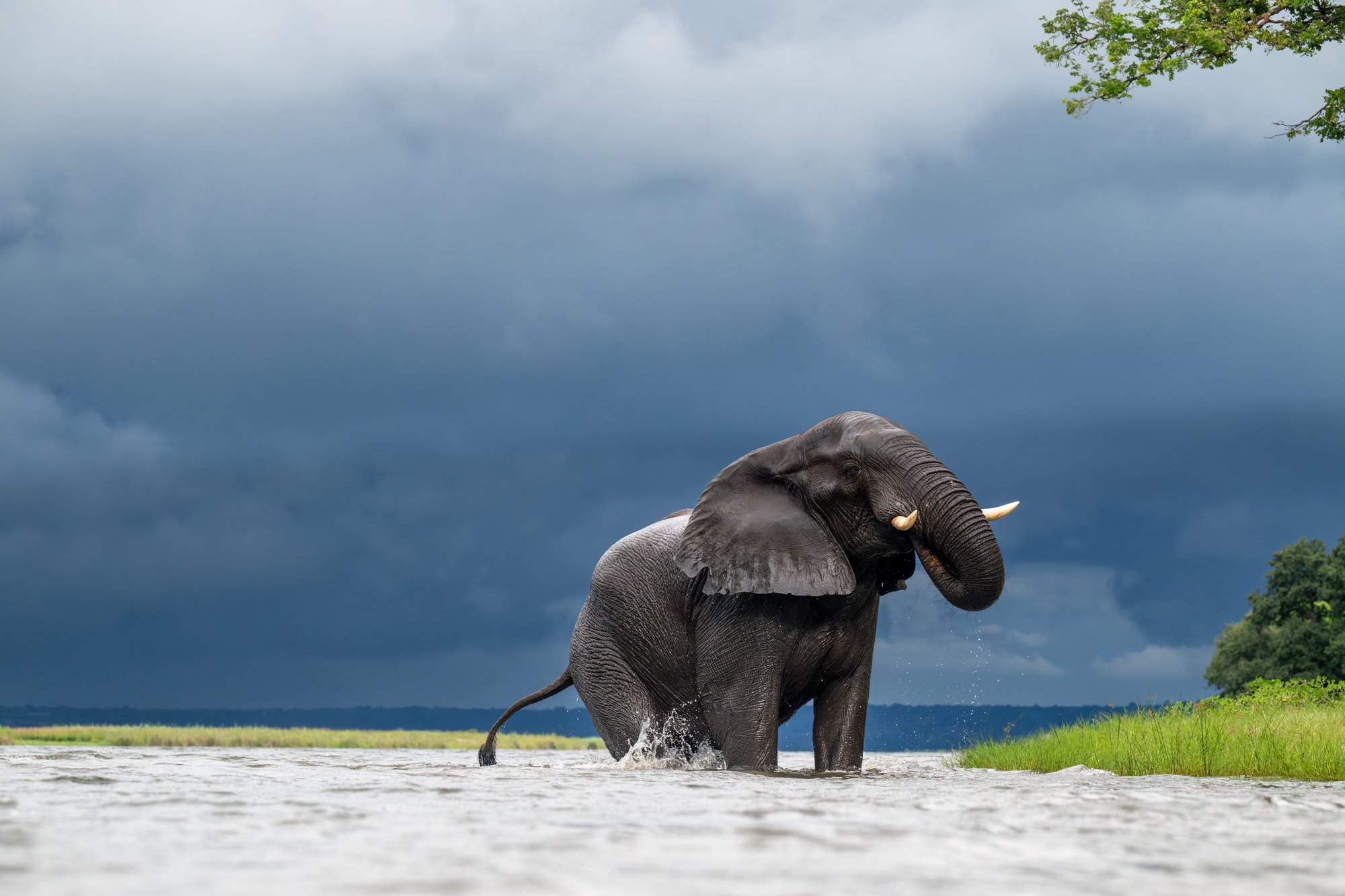
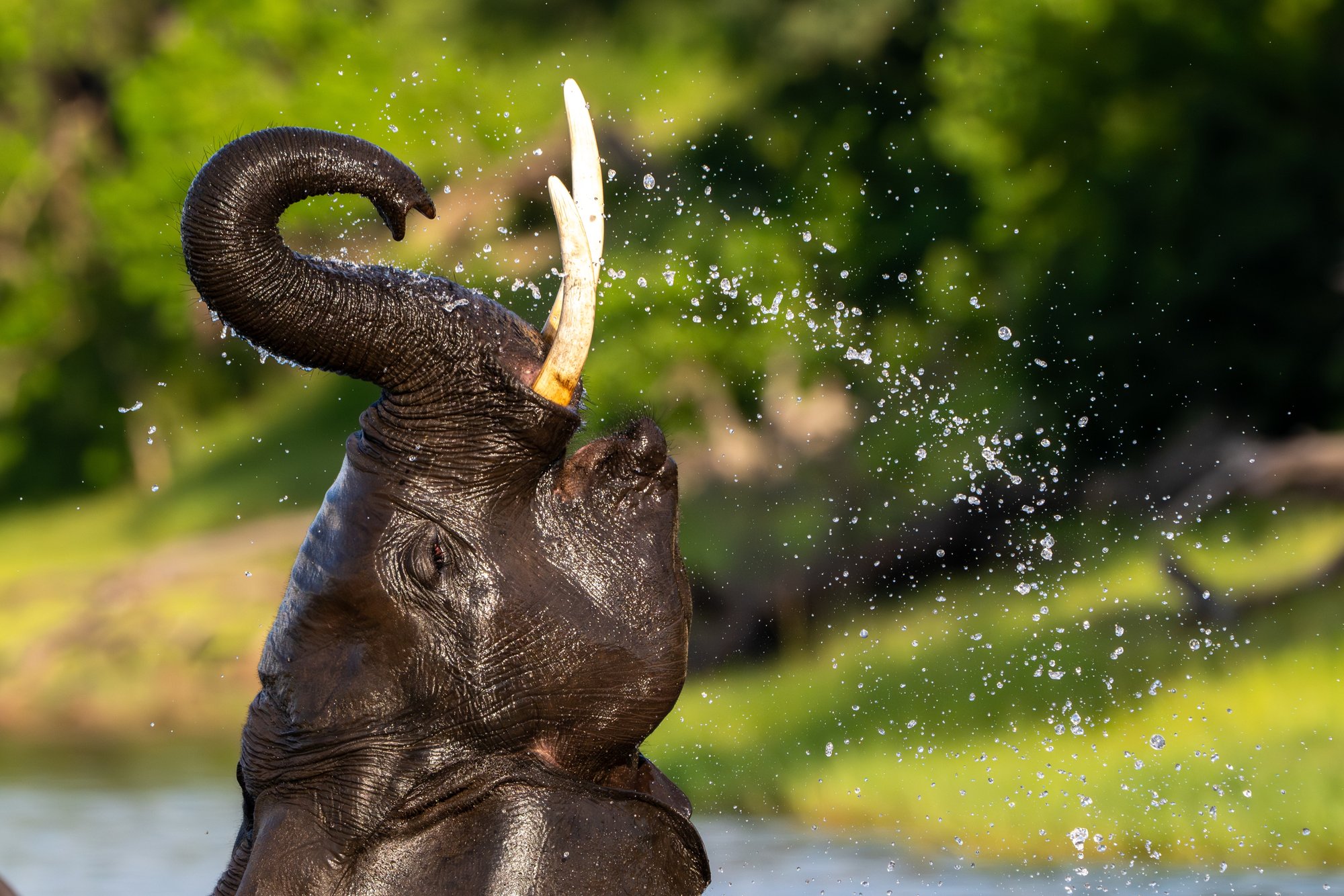
You land in Kasane, a short hop from Johannesburg. The Chobe riverfront is minutes away, and on your first afternoon you can be on a small boat with elephants swimming past, hippo surfacing beside you and fish eagles calling overhead. In the dry months, from about August to October, the elephants gather here in their hundreds.
For more privacy, fly on to the Linyanti instead. Its private concessions share the same great herds of elephant but very few vehicles, with wild dog, lion and leopard, and night drives that the national park does not allow. Camps such as King’s Pool and DumaTau sit on the river here.
“Start in the north and finish on the pans. You begin with the busiest, most dramatic wildlife and end somewhere so quiet you can hear your own heartbeat. It’s the right order.”
Alex · The Safari Edit
03
Nights 4 to 7: The Okavango Delta
A light aircraft carries you south over the floodplains to the Okavango Delta. We split these four nights between two camps, because the Delta is really two experiences.
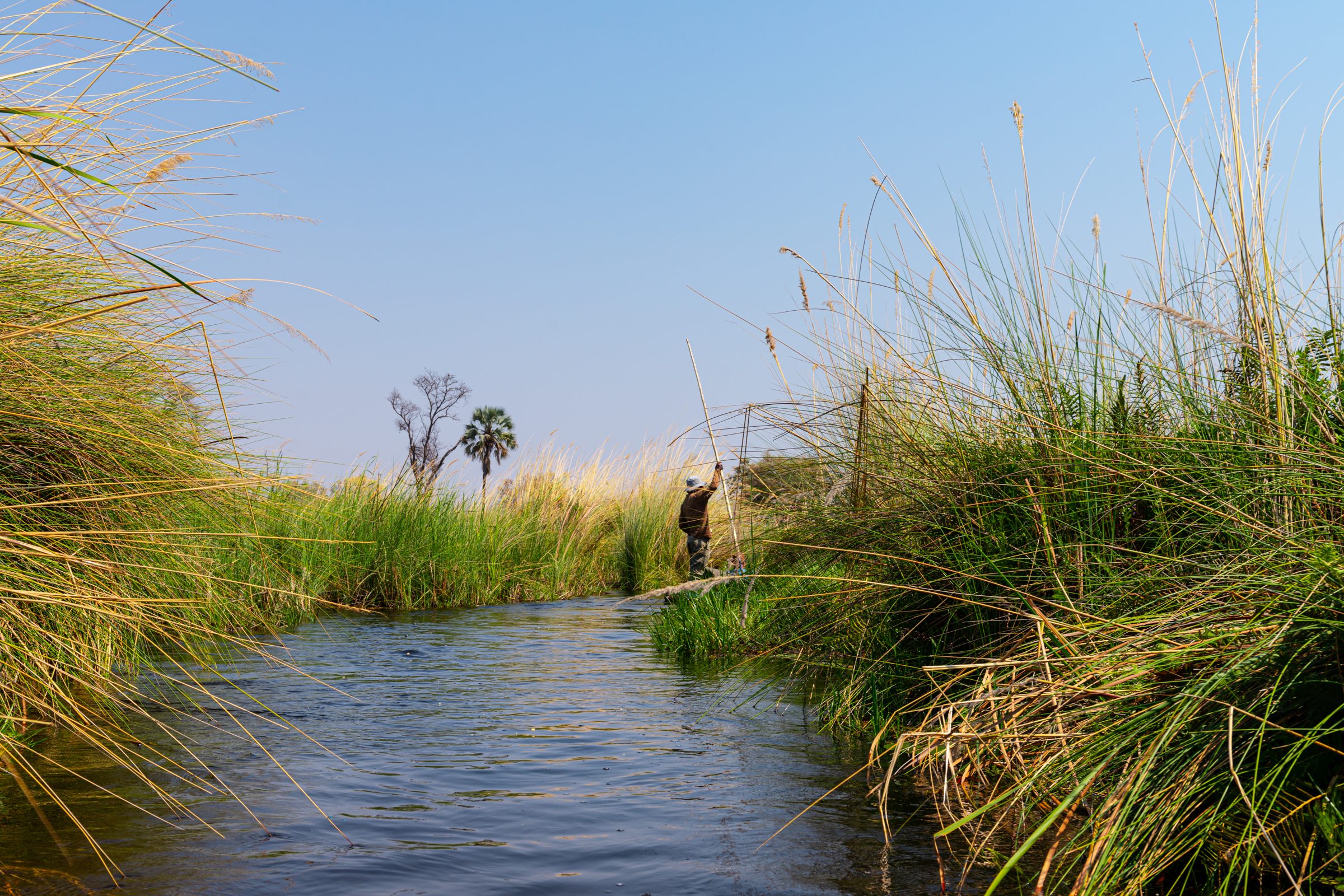
The first two nights are at a water camp, deep in the permanent channels. You glide through the reeds by mokoro, poled by a guide standing at the back, and watch for painted reed frogs, kingfishers and elephants wading between the islands. The second two nights are at a land camp on one of the larger islands, for game drives and walks among lion, leopard and buffalo.

From around June to August the flood is at its height, and the Delta is full of water in the middle of the dry season. It is the most remarkable time to be here.

04
Nights 8 to 10: The Makgadikgadi Salt Pans
The last flight takes you east to the Makgadikgadi, an ancient lake bed of salt and grassland that runs to the horizon. After the water and greenery of the Delta, the space and silence here are startling.
What you do depends on the season. From December to April, the rains bring the zebra migration to the pans, with tens of thousands of zebra and wildebeest grazing the new grass. From May to November, the pans dry hard enough to cross by quad bike, and you can sleep out on the salt under more stars than you knew existed. All year, families of habituated meerkats will let you sit among them.

On your last morning you fly the short hop to Maun, and on to Johannesburg for the flight home.
05
The Best Time for This Botswana Itinerary
May – OctThe dry seasonThe classic time. The Delta is in flood, elephants crowd the Chobe River and game is easy to find. The pans are dry, for quad biking and sleeping out. September and October are hottest and busiest.
Dec – AprThe green seasonLush and quieter, with lower rates. The zebra migration reaches the pans, so the salt pans are at their liveliest. Afternoon storms, and some Delta channels are lower.
NovIn betweenThe first rains and the hottest weeks. Good value, with the zebra beginning to move towards the pans.
Not sure which month suits you? Our guide to Botswana safaris explains what each region is like through the year.
Planning a trip? Our emails walk you through it, from when to go to where to stay. Join our email series
06
Shorter or Longer: 7, 10 or 12 Nights
- — 7 nights: Three nights at Chobe or the Linyanti, then four in the Okavango Delta.
- — 10 nights: The route above: elephants, the Delta and the salt pans.
- — 12 nights: Start with two nights at Victoria Falls, an hour by road from Kasane.
- — Longer: Begin or end in Cape Town, or add a few nights in the Central Kalahari in the green season.
The route works as well for a honeymoon as for a family trip or a group of friends. We choose the camps around who is travelling.
07
Planning a Botswana Safari: The Practical Bits
- — Flights: Overnight from London to Johannesburg, then short flights to Kasane and home from Maun.
- — Light aircraft: Soft bags only, usually around 20kg each including hand luggage.
- — Malaria: Northern Botswana is a malaria area. Speak to your GP or a travel clinic before you go.
- — Entry: UK passport holders can currently visit without a visa. Check the latest rules on GOV.UK before you book.
The last evening
Your last night is out on the salt pans, with nothing between you and the stars.
A week ago you were drifting past elephants on the Chobe River. Then came the reeds and the islands of the Delta, the flood moving silently beneath the mokoro.
Now there is only the flat white earth, a low fire and a sky so full of stars it hardly seems real. It is the quietest place on the journey, and the one you will think about most.
Plan it with us
Tell us when you’d like to travel. We’ll shape the rest.
Every Botswana safari we plan is built around your month and the people travelling. It costs nothing to talk.
Follow us on social
Connect with us for safari inspiration, advice and recommendations!